
Cross-reactive sensing arrays:
Whist specific and highly targeted receptors have powered analytical science for decades, there is a growing appreciation of the power of cross-reactivity in sensors. Indeed this is how our sense of smell and taste work – using the differential patterns generated by a complex sample across a relatively small number of receptors. In our group, we design artificial arrays using, molecular receptors, nanomaterials and metal-organic frameworks, for the detection of hazardous materials, counterfeit products and even disease. We have reviewed the field here and here and exemplar projects include:
Liver fibrosis detection
Collaborators: William Rosenberg (UCL/Royal Free), Vincent Rotello (UMass Amherst) and others

Deaths from liver disease, in contrast to cancer and heart disease, have increased over the last 30 years, at an estimated £9bn annual cost to the NHS. Liver disease severity, treatment and survival are heavily impacted by the amount of liver scarring (fibrosis) caused by the disease. To improve detection and treatment of this liver scarring, we are working with the UK’s leading clinicians to develop a sensing array that can identify fibrosis at an early stage from a blood test, without recourse to painful and invasive liver biopsy. This work is supported by the University of Glasgow, UKRI, MRC and the Academy of Medical Science. Example: Adv. Mater. 2018, 30:1800634
Tasting food and beverages with chemical tongues
Collaborators: Alasdair Clark (UoGlasgow) and others
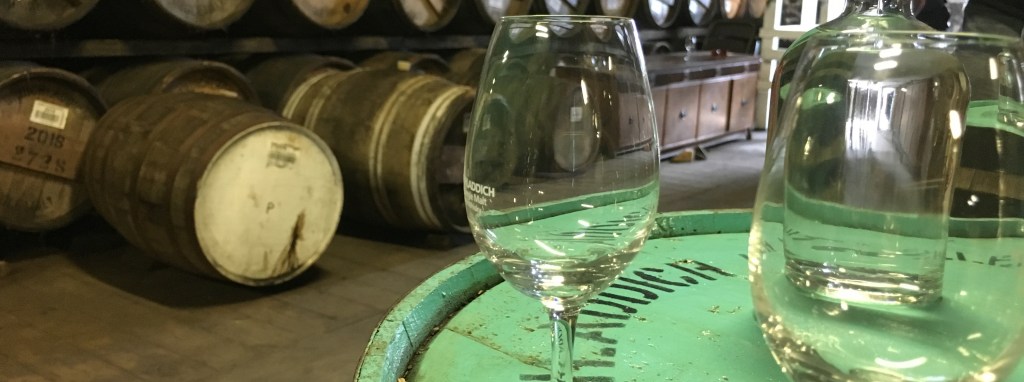
We are exploiting our sensing arrays as chemical tongues to taste whisk(e)y and other products for QA/QC, sensory analysis and counterfeit detection. In collaboration with the Clark group we are exploiting plasmonic materials as an optical sensor array, and are currently investigating several other array technologies for this purpose. Example: Nanoscale 2019, ACS Appl. Nano Mater. 2022
Water and sludge pollution detection
Collaborators: Caroline Gauchotte-Lindsay (UoGlasgow), INCLUE and NANAQUA consortia
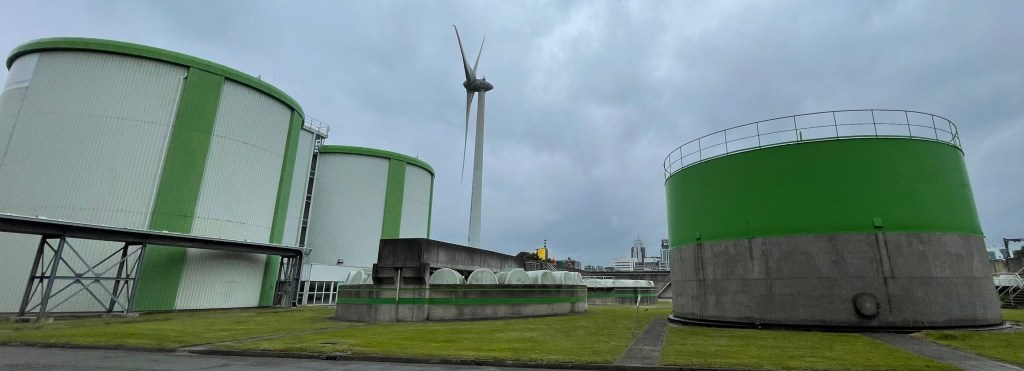
We are currently collaborating with analytical chemists and environmental engineers to build a low-cost sensing arrays for contaminants of emerging concern in waters and treatment sludges. We envisage that this pilot work will lead to research tools and point-of-need sensors, in both centralised and distributed water treatment networks. Example: Env. Sci. Nano 2023

Optically active nanomaterials
We synthesise a wide range of plasmonic and luminescent nanomaterials for use in our sensors and technologies described above:
Gold nanoparticles
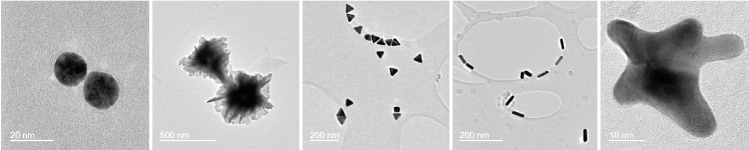
The plasmonic properties of gold (and silver) nanoparticles, arising from the coherent oscillations of free electrons at the particle surface, can be exploited to modulate fluorescence and enhance Raman spectroscopy techniques. We tailor the shape and size of our nanoparticles particles to achieve the desired plasmonic resonances for a given technique. Examples: ACS Nano 2016, 10:10454; Nat. Commun. 2016, 7:12189; Nanoscale 2017, 9:16459
Quantum dots
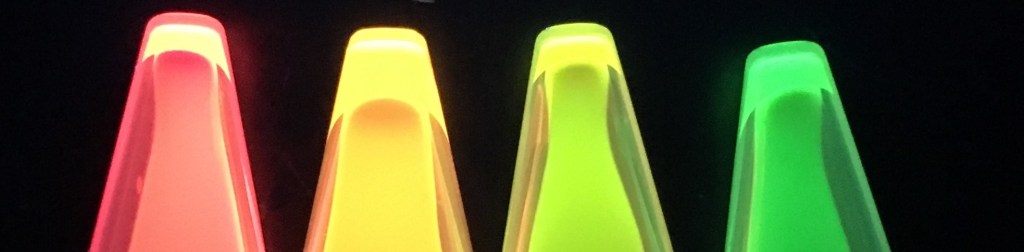
Quantum dots are semiconducting nanomaterials with bright, narrow, photostable and tuneable emission resulting from quantum confinement of a photo-excited electron. We produce a wide range of Cd-containing and Cd-free luminescent nanocrystals for labelling and sensing applications, and for incorporation into optical devices. Examples: ACS Nano 2016, 10:1139; Chem. Commun. 2019, 55:5495
Polymer dots
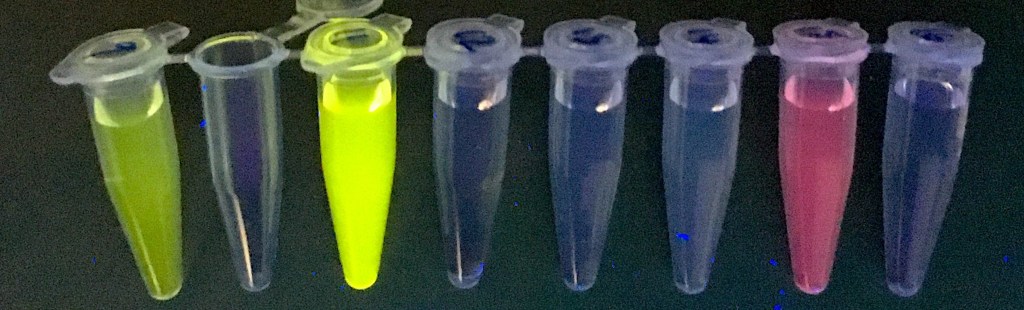
In collaboration with several groups, we recently began experimenting with the possibilities of luminescent polymer dots from novel molecular precursors. We are starting to study the photophysics of such systems and apply them in new point-of-care diagnostic tests. Example: Anal. Chem. 2019, 91:10955
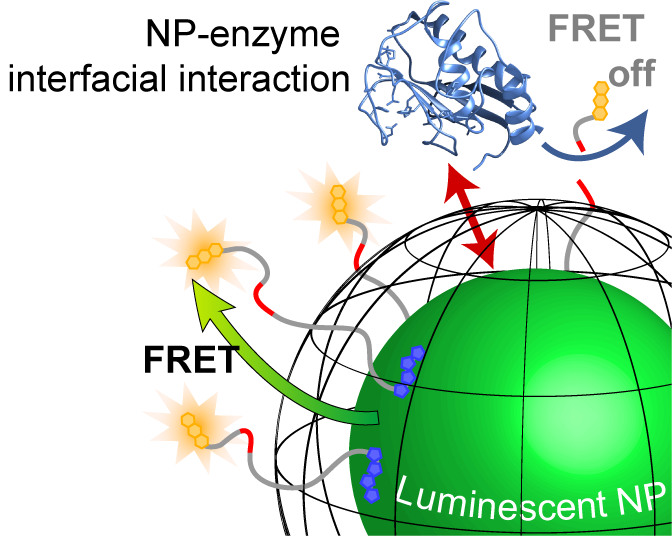
Responsive nano-assemblies:
We are studying the application of optically active nanoparticles and supramolecular assemblies of nanocrystals for the detection of explosives and other environmental pollutants, and biomolecules such as enzymes and nucleic acids. We utilise physical (e.g. light or heat) and molecular triggers (e.g. binding or cleavage) to actuate a measurable output from our assemblies. A few examples of previous and current projects are detailed here, with many more in progress:
Quantum dots for explosive detection
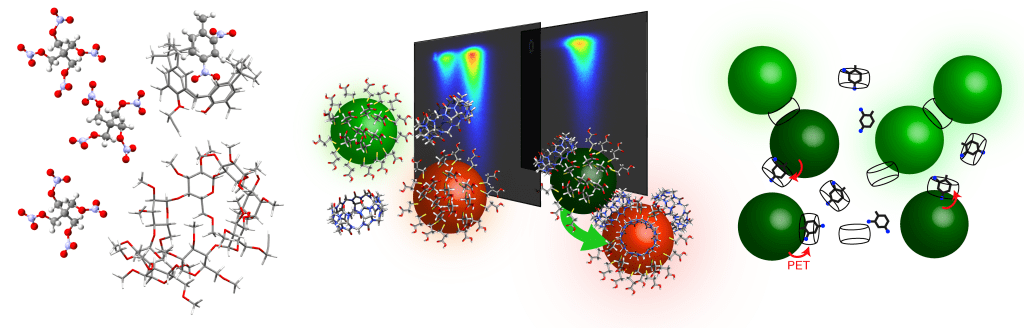
We have extensive expertise in the use of luminescent quantum dot nanoparticles for the sensing of explosive materials and their decomposition products, using surface bound supramolecular receptors. Examples: ACS Nano 2016, 10:1139; Chem. Commun. 2019, 55:5495
Bacterial separations – SEPsis Project
Collaborator: Melanie Jimenez (UoGlasgow)

In collaboration with engineers, immunologists and medics, we are combining biological receptors, molecular engineering and magnetic nanoparticles to effect bacterial separations in microfluidic devices for use in sepsis diagnostics. This work is supported by the Chief Scientist Office.
Copyright © 2025 W J Peveler
 Peveler Bio-Nano-Sensing Laboratory